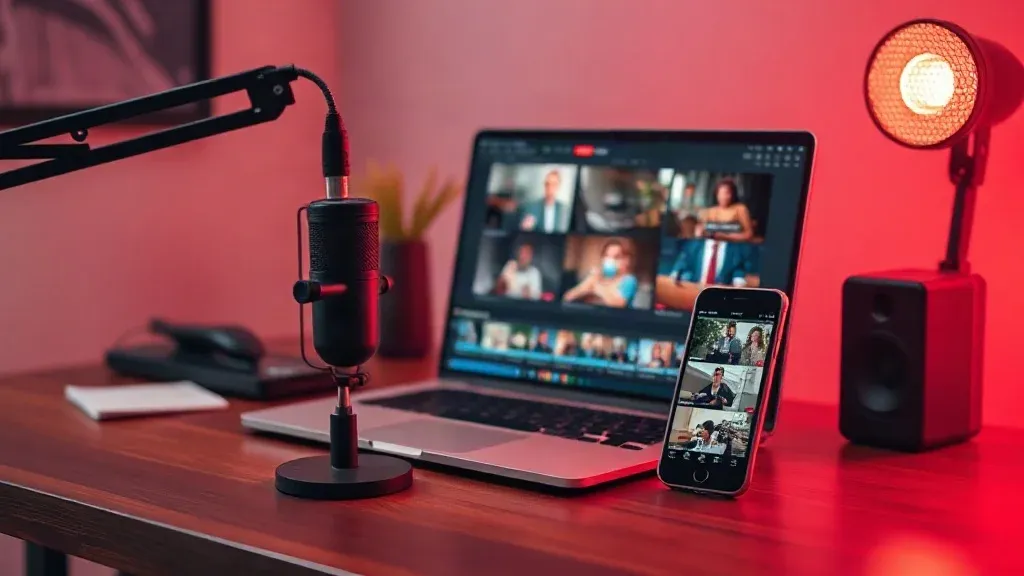
Solo creators rarely lose to bigger teams on ideas. They lose on distribution. A repurposing system lets one strong piece of content fill every channel you care about, so you research and record once and publish many times.
The short version: make one substantial piece each week, then cut it into short clips, text posts, a newsletter and an article. Batch the work, keep the message consistent, and do not copy and paste identical posts everywhere.
Start with a pillar piece
Each week, produce one substantial asset: a video, a podcast episode, a live session or an in-depth article. Everything else is cut from it. This keeps your message consistent, and you only research and record once.
Choose a topic that your audience already asks about. Our guide to SEO for one-person businesses explains how to find questions worth answering.
The repurposing map
- Short video clips. Pull three to five moments with a strong hook and reframe them vertically for short-video platforms.
- Text posts and threads. Turn the key argument into a LinkedIn post or a thread, and turn single insights into standalone posts.
- Newsletter. Summarise the lesson, add a personal angle and link to the full piece. See the email marketing engine.
- Blog article. Edit the transcript into a structured, search-friendly article that keeps working long after the social posts fade.
- Quote graphics and carousels. Visual summaries for platforms like Instagram and LinkedIn.
- Audio. A video's audio track can become a podcast episode.
Adapt, do not just copy
Each platform has its own style, length and audience expectations. A clip that works on one platform may look odd on another. Change the opening, the format and the call to action so it feels native. Repeating the same post word for word can look lazy and can be penalised by some platforms.
A weekly workflow you can sustain
Batching is what makes this manageable. A simple week:
- Monday: plan the pillar piece and write an outline.
- Tuesday: record or write it.
- Wednesday: edit the pillar piece and publish it.
- Thursday: cut clips, quotes and posts from it.
- Friday: schedule the week's posts and send the newsletter.
Our batch recording guide shows how to record several pillar pieces in a day or two.
Use tools to cut the time
Text-based editors such as Descript let you edit video and audio by editing the transcript, which makes cutting clips quick. Local recording tools such as Riverside.fm capture clean audio and video for each speaker. For graphics, a design tool such as Canva Pro lets you make templates once and reuse them. Choose tools that fit your budget, and keep the list short.
Keep the quality up
Repurposing should add value, not just volume. Check each piece:
- Does it make sense on its own, without the original?
- Does it have a clear point and a clear next step?
- Is it accurate? Check any numbers or claims before you share them.
- Do you have permission to use guest content and clips of other people?
Track what works
Every month, note which pieces and formats brought engagement, replies and signups. Do more of those, and drop formats that take time and bring nothing. This is how a simple system gets better over time.
Questions people ask
How many pieces can I get from one video?
Often three to five clips, a newsletter, a few posts and an article. The number depends on how much of the video is genuinely useful on its own.
Do I need to be on every platform?
No. Pick one or two. Our social media system explains how.
Is repurposing the same as duplicate content?
For search, publish the full article on your own site and use different wording on social platforms. Avoid posting the same article in full on several sites.
How do I stop it taking over my week?
Set a fixed time limit for each step, and use templates. If a piece is not working, drop it and move on.